
OSHA Warehouse Housekeeping: What the Rules Require and How Cleaning Fits

OSHA's main housekeeping rule for warehouses is 29 CFR 1910.22(a). It requires employers to keep all places of employment, passageways, storerooms, service rooms, and walking-working surfaces "in a clean, orderly, and sanitary condition," to keep workroom floors clean and, as far as feasible, dry, and to keep walking surfaces free of hazards such as sharp or protruding objects, loose boards, corrosion, leaks, spills, snow, and ice. Two related rules matter in a warehouse too: 1910.176 covers clear aisles and storage areas, and 1910.141 covers general sanitation. A cleaning crew can do a lot of the physical work behind these rules, but the duty to comply stays with the employer.
That last point is worth saying plainly up front. No cleaning company can make a warehouse "OSHA compliant." What a good crew can do is keep floors, aisles, and shared spaces in the condition the rules describe, on a schedule that fits your shifts.
What 1910.22 actually says
The standard is short. Section (a) on surface conditions has three parts, and they read almost like a cleaning scope:
All places of employment, passageways, storerooms, service rooms, and walking-working surfaces are kept in a clean, orderly, and sanitary condition.
The floor of each workroom is kept clean and, to the extent feasible, dry. Where wet processes are used, drainage has to be maintained, and dry standing places such as platforms or mats should be provided where feasible.
Walking-working surfaces are kept free of hazards like protruding objects, loose boards, corrosion, leaks, spills, snow, and ice.

Section (d) adds inspection and repair. Walking-working surfaces have to be inspected regularly and as needed, and a hazardous condition has to be fixed or guarded before anyone uses that surface again. Structural repairs need a qualified person.
Notice what the rule does not do. It does not set a cleaning frequency, name a product, or list tasks. It sets an outcome, and each facility decides how to get there.
The two other rules warehouse managers run into
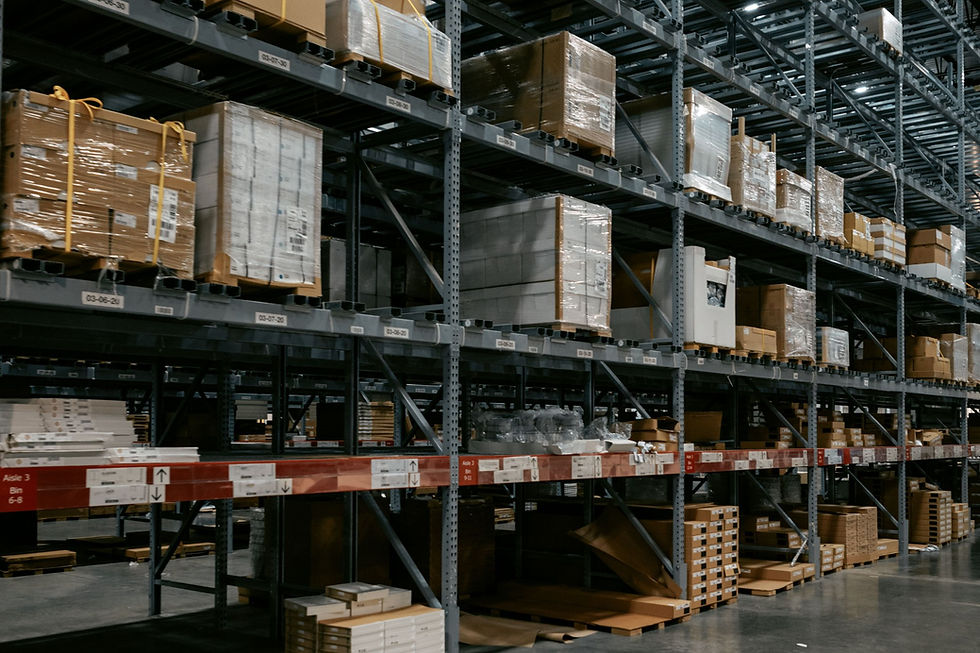
1910.176, handling materials. Where forklifts and other mechanical handling equipment are used, aisles and passageways must be kept clear and in good repair, with nothing across or in an aisle that could create a hazard, and permanent aisles must be marked. Section (c) says storage areas must be kept free from accumulated materials that create tripping, fire, explosion, or pest hazards. In practice that means stray shrink wrap, broken pallets, and cardboard piling up at rack ends.
1910.141, sanitation. Its housekeeping paragraph says workplaces are kept clean "to the extent that the nature of the work allows," floors are kept dry where practicable, and floors and passageways are kept free of protruding nails, splinters, loose boards, and unnecessary holes. The same section also covers waste receptacles, restrooms, and washing facilities.
What Minnesota adds
Minnesota runs its own OSHA program, called MNOSHA, through the Minnesota Department of Labor and Industry. It covers private employers in the state as well as state and local government workplaces, and it adopts the federal standards above by reference.
MNOSHA also has some rules that go beyond federal OSHA. A few that come up for warehouse and plant managers:
Employers in certain higher-risk industries must have a written A Workplace Accident and Injury Reduction (AWAIR) program.
Employers with more than 25 employees must have a joint labor-management safety committee.
Minnesota's Employee Right-to-Know rules include annual training on hazardous chemicals, which can include the cleaning products used on site.
If you are not sure which of these apply to your operation, the Department of Labor and Industry is the right place to ask.
Where a cleaning crew fits
Your own team handles a lot of housekeeping during the shift: picking up a dropped carton, wiping a small spill, keeping a work cell in order. A cleaning crew is most useful for the work that is hard to fit around production.

Floors. Warehouse concrete collects dust, tire marks, and oil drips that a broom never really removes. Scheduled auto-scrubbing keeps travel lanes and dock areas cleaner and less slippery, and it keeps floor markings visible. Sealed or polished concrete holds up better when it is scrubbed on a routine.
Aisles, rack ends, and storage areas. Crews can clear loose debris from aisles, sweep under the first rack level, and pull accumulated packing waste to the dumpster or compactor so it does not build up where people walk.
Docks and staging. Loading docks track in water, salt, and grit, especially through a Minnesota winter. Regular dock cleaning helps with the "dry to the extent feasible" part of the rule. Entrance mats are part of this too.
Restrooms, break rooms, and offices. These fall under the sanitation rule and are often the spaces employees notice first. They usually run on the same after-hours or between-shift schedule as the rest of the building.
What a crew should not do is take over hazards that belong to maintenance or safety staff. Damaged dock plates, broken rack, a leaking roof drain, or a recurring hydraulic leak need a repair, not just a mop. A good cleaning crew will flag what it sees and leave the fix to the people who own it.
Setting a warehouse cleaning schedule
Because the rule sets an outcome instead of a frequency, the schedule should come from how your building runs. A few questions help:
When is the floor quietest? Many sites clean between shifts, overnight, or on a weekend shutdown.
Which zones get the most traffic and spills? Docks and main travel lanes usually need more frequent scrubbing than back storage.
What floors do you have? Bare, sealed, and polished concrete each call for different care.
Who on your team will review the work? A short written scope and an agreed way to report issues make the arrangement easier to manage. Our janitorial scope of work template is a good starting point.
Frequently asked questions
Does OSHA say how often a warehouse floor has to be cleaned?
No. 1910.22 requires floors to be kept clean and, as far as feasible, dry, but it does not set a frequency. The right schedule depends on traffic, spills, weather, and the type of floor.
Is a cleaning company responsible for OSHA compliance at my warehouse?
The employer is responsible for meeting OSHA and MNOSHA rules at its own site. A cleaning company can do much of the physical housekeeping, but it cannot take on your compliance duty or certify that your facility meets the standard.
Does OSHA's housekeeping rule apply to the office inside a warehouse?
Yes. 1910.22 covers all places of employment, passageways, storerooms, and service rooms, so offices, restrooms, and break rooms inside the building are included along with the warehouse floor.
Getting help with warehouse housekeeping
Clear Facility Services cleans warehouses, distribution centers, and manufacturing sites, and we can serve facilities across Hennepin, Ramsey, Anoka, Scott, Dakota, and Carver counties. We schedule around your shifts and agree on a written scope before work starts. See our warehouse and industrial cleaning page for the services we offer, or call +1 (952) 900-2215 or email info@clearfacilityservices.com to set up a free estimate.


