
Commercial Carpet Cleaning Methods Compared: Extraction, Encapsulation, and Bonnet

Commercial carpet is usually cleaned with three methods: hot water extraction, encapsulation, and bonnet cleaning. Hot water extraction is the deep, restorative clean that removes embedded soil, and several major carpet manufacturers name it in their care and warranty guides. Encapsulation is a faster, low-moisture clean for keeping traffic areas looking good between deep cleans. Bonnet cleaning is the quickest surface touch-up, but several major carpet makers recommend against it.
The right answer for most buildings is not one method. It is a plan that uses the right method in the right place, at the right frequency, based on how much traffic each area gets.
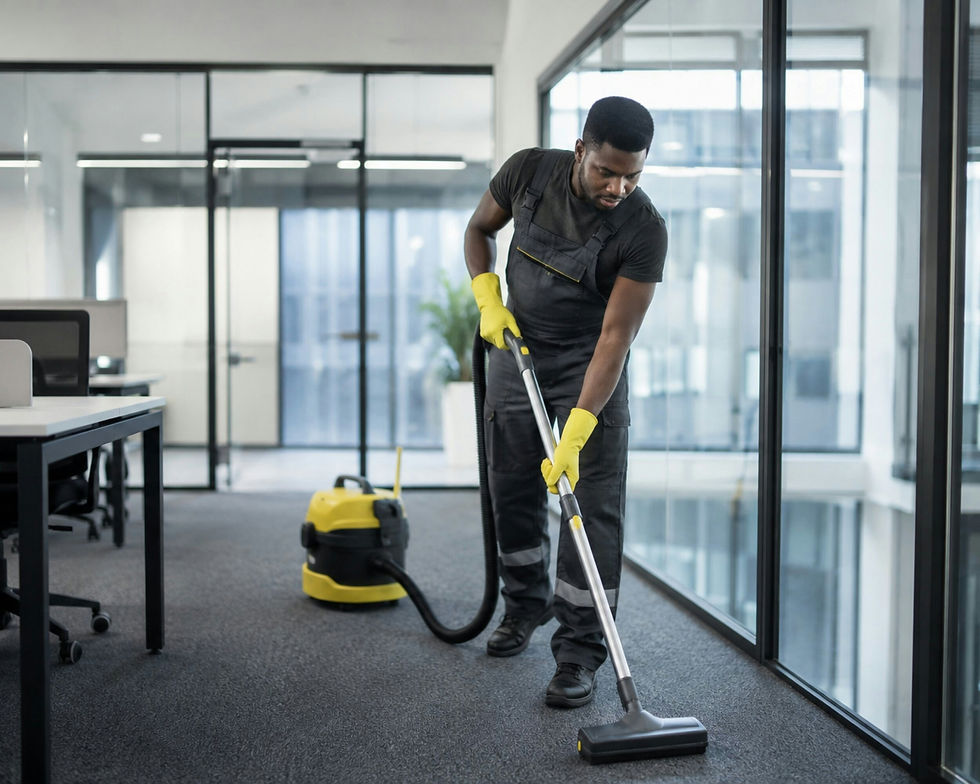
Why the method matters
Carpet in a commercial building takes far more abuse than carpet at home. Lobbies, main hallways, and breakrooms collect grit, oils, and spills every day. The method you pick affects how much soil comes out, how long the floor is wet, and whether the work lines up with the manufacturer's care guide.
The Carpet and Rug Institute (CRI), the carpet industry's trade group, describes commercial carpet care in layers: keeping soil out with entry mats, vacuuming, spot and spill removal, interim cleaning, and restorative cleaning (CRI maintenance guidelines). Extraction, encapsulation, and bonnet cleaning fit into the last two layers.
Hot water extraction
Hot water extraction is often called steam cleaning, though it uses heated water rather than steam. The carpet is vacuumed, sprayed with a cleaning solution, agitated, and then rinsed with hot water that is pulled back out by strong suction along with the loosened soil.
Best for: restorative deep cleaning, heavy soil, and meeting warranty care requirements.
Trade-offs: it puts the most water into the carpet, so drying takes longer and air movers help. Beaulieu's commercial care guide says drying generally does not exceed six to eight hours (Beaulieu care and warranty guide). For an office or clinic, that is why extraction is usually scheduled after hours or over a weekend.
Manufacturers lean on this method heavily. Interface calls hot water extraction the most effective restorative method and the only restorative method it recommends (Interface carpet tile maintenance guidelines). Beaulieu's warranty terms call for professional hot water extraction at least every 12 months, with more frequent cleaning in lobbies, corridors, and elevators.
Encapsulation
Encapsulation is a low-moisture method. A cleaning solution is sprayed on and worked into the carpet with a counter-rotating brush machine. As it dries, the solution surrounds the soil and turns it into dry residue that is removed by the next vacuuming.
Best for: interim cleaning of traffic lanes, entrances, and hallways, where the goal is to keep the carpet looking even between deep cleans.
Trade-offs: it does not rinse the carpet the way extraction does, so it does not replace deep cleaning. Shaw Contract's care checklist recommends hot water extraction after every third or fourth encapsulation (Shaw Contract maintenance checklist).
The big advantage is time. CRI describes interim systems as high production and designed to return the carpet to use quickly, which makes encapsulation a good fit for busy areas that cannot sit wet for long.

Bonnet cleaning
Bonnet cleaning uses a rotary floor machine with an absorbent pad, called a bonnet, that spins on the carpet surface and picks up soil from the tips of the fibers.
Best for: a quick improvement in surface appearance.
Trade-offs: it cleans the top of the carpet and can leave deeper soil in place. More important for building owners, several manufacturers warn against it. Shaw Contract states bonnet cleaning is not recommended. Interface and Bentley Mills both say bonnet or rotary cleaning is not recommended and may void warranty coverage (Bentley maintenance guidelines). Beaulieu prohibits bonnet cleaning for restorative cleaning of its commercial carpet.
Side by side
Hot water extraction: uses the most water, has the longest dry time, used for deep, restorative cleaning, and is named or required by several manufacturers.
Encapsulation: uses low water, has a short dry time, used for interim appearance cleaning, and is accepted as interim care by the Shaw, Interface, and Bentley guides.
Bonnet: uses low water, has a short dry time, used for surface touch-ups, and is not recommended by several manufacturers and may void warranties.
How often each method should run
Frequency depends on traffic. Shaw Contract publishes a general guideline for commercial carpet:
Light traffic (private offices, cubicles): vacuum two or more times a week, hot water extraction once a year.
Moderate traffic (shared offices, secondary hallways, conference rooms): vacuum daily, extraction twice a year.
Heavy traffic (main entrances, elevators, main hallways, breakrooms): vacuum daily or more, interim cleaning monthly, extraction four times a year.
Extra heavy traffic (entrances in severe climates, cafeterias): interim cleaning weekly and extraction monthly.
Shaw notes these are general guidelines and that each program should be customized to the building. In the Twin Cities, winter belongs in that conversation. Salt and slush tracked through entrances can push those areas toward the heavier end of the chart.

How to choose for your building
Start with your carpet's care guide. If you do not have it, check your building records or ask the installer which carpet you have, since many manufacturers post their commercial care guides online. Follow what it says about restorative cleaning, since that is what a warranty claim will be measured against.
Then sort your carpet by traffic. Private offices may only need regular vacuuming and an annual deep clean. Entrances and main corridors usually need interim cleaning between extractions. Ask any carpet cleaning company you are considering which method it plans to use in each area and how that matches your manufacturer's guidance.
Clear Facility Services provides commercial carpet cleaning using hot water extraction for offices, clinics, schools, apartment common areas, and other commercial buildings, scheduled after hours. We serve Hennepin, Ramsey, Anoka, Scott, Dakota, and Carver counties from our office in Fridley. For free estimates, call +1 (952) 900-2215 or email info@clearfacilityservices.com.
Frequently asked questions
Is encapsulation as good as hot water extraction?
They do different jobs. Encapsulation keeps traffic areas looking good between deep cleans and dries quickly. Hot water extraction rinses out embedded soil and residue, which is why carpet makers like Interface and Beaulieu name it for restorative cleaning.
Can bonnet cleaning void a carpet warranty?
It can. Interface and Bentley Mills both say bonnet or rotary cleaning may void warranty coverage, and Beaulieu prohibits it for restorative cleaning. Check your own carpet's care guide before approving bonnet cleaning.
How long does commercial carpet take to dry after extraction?
It depends on the carpet, the equipment, and airflow. Beaulieu's guide says drying generally does not exceed six to eight hours, and Shaw recommends air movers and keeping the HVAC running during and after cleaning.

