Understanding Ramsey County Cleaning Standards

You manage a commercial facility in Ramsey County, and somewhere in the back of your mind, there's a nagging question you can't quite shake: Are we actually cleaning this place the right way?
It's not a trivial concern. Most facility managers aren't trained sanitation experts, they're juggling vendor contracts, lease renewals, HVAC issues, and a dozen other fires. Cleaning standards get delegated, assumed, or quietly ignored until something goes wrong. And when something goes wrong, a slip-and-fall on an unmaintained floor, an illness outbreak traced back to a break room, a failed inspection, the fallout is real.
Here's the good news: understanding what Ramsey County cleaning standards actually require isn't complicated once it's laid out clearly. This post will walk you through exactly what you need to know, what it means for your specific facility, and how to build a cleaning program that holds up.
Why Cleaning Standards Matter More Than You Think
The Minnesota Department of Health doesn't prescribe a single universal cleaning checklist for every commercial facility. Instead, requirements shift based on your facility type, an office building faces different expectations than a healthcare clinic, a child care center, or a food service operation. What remains consistent is the underlying obligation: the best product choices and cleaning practices vary by the type of facility, the specific location being cleaned, and the applicable requirements under Minnesota law.
That nuance trips people up. "We clean regularly" isn't the same as "we clean properly." And the gap between those two things is where liability lives.
What Ramsey County Cleaning Standards Actually Cover
Think of cleaning standards less as a single rulebook and more as a layered system, local health guidelines, state regulations, and nationally recognized frameworks that together define what "clean" means for your building.
At the core, effective cleaning programs address five areas:
High-touch surface disinfection. Door handles, light switches, elevator buttons, shared equipment, these are the vectors through which illness spreads most readily in commercial spaces. There are important distinctions between cleaning, sanitizing, and disinfecting: cleaning removes soil but makes no claims about killing organisms, while sanitizing kills surface bacteria to very low levels, and disinfecting goes further. Knowing which approach applies where is the difference between a surface that looks clean and one that actually is.
Waste management. Proper trash and recycling protocols prevent odors, pest activity, and the kind of deferred-maintenance reputation that's hard to recover from.
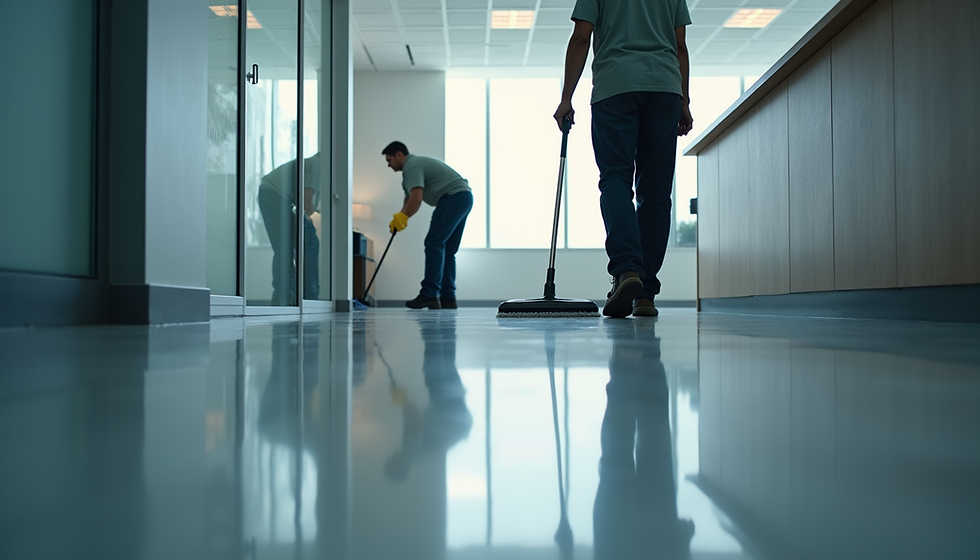
Floor care. High-traffic areas accumulate more than dirt, they accumulate wear. Regular sweeping, mopping, and periodic deep cleaning of carpets protect both the integrity of your flooring and the safety of the people walking on it.
Restroom sanitation. Restrooms are where occupant confidence in your facility is made or broken. Frequent cleaning, restocking, and documented service logs are non-negotiable here.
Air quality. Ventilation and filtration aren't just comfort features, they're part of maintaining a healthy indoor environment, particularly in Ramsey County's colder months when buildings seal up tight and air recirculates.

The Standards Framework Behind the Cleaning Industry
When evaluating whether your cleaning program, or your cleaning vendor, is truly meeting professional standards, the benchmark most widely recognized in the industry is the Cleaning Industry Management Standard (CIMS), developed by ISSA, the global association for cleaning and facility solutions. CIMS helps facility managers verify that their service providers or internal teams meet the highest standards in cleanliness, safety, and management, with measurable benchmarks for quality, customer satisfaction, and compliance.
For facilities with sustainability goals, CIMS-GB (the Green Building designation) also supports LEED EB: O&M credits, worth knowing if your building has green certifications or aspirations.
Operating a business in Ramsey County also means aligning with Minnesota Department of Health recommendations and local ordinances, which together form the compliance baseline for workplace cleanliness.
Building a Cleaning Program That Actually Works
A cleaning program isn't a schedule, it's a system. Here's how to build one that holds up under scrutiny:
Start with a facility assessment. Walk every area with fresh eyes. Identify high-traffic zones, high-touch surfaces, and any spaces with specialized requirements (server rooms, medical areas, food prep zones). Your cleaning frequency and methods should reflect what actually happens in your building, not a generic template.
Set a cleaning schedule based on reality. Daily attention for restrooms and break rooms is standard. A long-term cleaning plan should cover daily, weekly, monthly, and annual tasks, including both routine maintenance and periodic services like professional carpet cleaning or disinfection treatments. HVAC filters and vents often get missed on informal schedules; build them in explicitly.
Choose the right products for each task. Product selection should vary based on the area being cleaned and the specific requirements under Minnesota law, and a healthcare-level disinfectant is not required for everyday use on counters, floors, and other low-contact surfaces. Over-disinfecting with harsh chemicals can damage surfaces and create unnecessary chemical exposure, not a win for anyone.
Train your people and hold the line. Equipment and products only work as well as the people using them. Adequate training and personal protective equipment are essential for any staff required to administer disinfectants, since disinfectants are typically more hazardous than general cleaning products. Document your training. It protects your staff and your facility.
Keep records. Cleaning logs, inspection reports, and supply documentation aren't paperwork for its own sake — they're your evidence of due diligence if questions ever arise. Electronic timekeeping and service checklists tied to industry-specific standards keep performance measurable and transparent.
What Inspections Look For
Compliance reviews, whether formal inspections or internal audits, focus on whether your cleaning practices align with established guidelines and whether you can demonstrate consistency. Facility managers increasingly include CIMS certification requirements in their RFPs, specifying that vendors must meet accepted industry quality standards. That tells you something: the facilities that take cleaning seriously are demanding proof, not promises.
To stay prepared, keep your logs current, address any occupant complaints promptly, and make sure whoever is doing your cleaning, in-house or contracted, understands the specific requirements of your facility type.
The Bottom Line
A facility that's actually clean isn't just visually tidy. It's a place where people feel safe, where liability exposure is managed, where materials and surfaces last longer, and where your organization's reputation is protected. That's not a small thing, and it doesn't happen by accident.
If you're not sure whether your current cleaning program meets the right standards for your Ramsey County facility, that uncertainty is worth resolving. CFS is here to help, reach out and we'll walk through it with you.